Hypnosis for Snoring
Snoring is the sound produced when air causes relaxed tissues in the throat or nose to vibrate during sleep. It may be occasional or persistent and can be affected by sleeping position, nasal blockage, alcohol, weight and the structure of the airway. Snoring can disturb both the sleeper and also other people. Loud snoring with pauses in breathing, choking, gasping or marked daytime sleepiness may indicate obstructive sleep apnoea and that requires medical assessment.
Can hypnotherapy help with snoring?
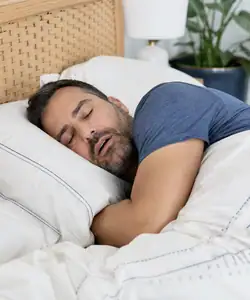 The Bill Frost: Changing States practice offers snoring online hypnotherapy via Zoom and in-person hypnotherapy in High Wycombe. Sessions seek to change habits that may contribute to snoring, reduce stress and support healthier sleep routines. Please speak to your GP first if symptoms could have a physical cause, especially if you suspect sleep apnoea. The Bill Frost: Changing States practice offers snoring online hypnotherapy via Zoom and in-person hypnotherapy in High Wycombe. Sessions seek to change habits that may contribute to snoring, reduce stress and support healthier sleep routines. Please speak to your GP first if symptoms could have a physical cause, especially if you suspect sleep apnoea.
It is sometimes said that snoring is not a problem of the snorer, but a problem for those that sleep with and around them! Loud snoring can reach the 70 to 90 decibel range. This is similar to the sound level of busy traffic, a vacuum cleaner, a hair dryer or a petrol lawn mower.
Although hypnotherapy can be used to enable partners to tune-out the sound of snoring, this is not a primary intervention! Snoring can certainly cause friction in some relationships.
Having ruled out and attended to physical causes, hypnotherapy can be used to adjust the snorers sleeping position and breathing actions. Alcohol moderation may also need to be addressed.
Where associated insomnia is a problem for the partner this should be dealt with as a separate issue.
Where weight is an issue with sleep apnoea this can also be addressed successfully using hypnotherapy.
More about snoring
Snoring is noise produced from the soft palate and other parts of the upper respiratory tract. It is most common in men, especially older, middle-aged and obese men. Around 40 per cent of all adults snore. Snoring can be very annoying for a partner who is kept awake by the noise. Often, because of this, couples sleep in separate rooms.
What causes snoring?
Snoring in children is often caused by enlarged tonsils and adenoids.
Buck teeth or a very small lower jaw can mean that the tongue is too large for the space available.
A very long soft palate (the soft part of the back of the roof of the mouth) will narrow the space between it and the back of the throat and can contribute to the problem.
Restricted air passage through the nose, for example because of a deviated nasal septum (the cartilage which divides the two nostrils) can cause a vacuum when the person inhales which can cause snoring. The soft tissues of the upper respiratory tract will close more easily and vibrations of the palate can occur. This is also why people snore more when they have a cold.
Nasal adenoids, nasal allergies and nasal tumours can also limit the passage of air through the nose.
Obesity which results in fatty tissue pressing on the upper respiratory tract and causing it to narrow.
Obstructive Sleep Apnoea (OSA)?
Apnoea refers to short spells when breathing stops. In obstructive sleep apnoea, the throat is sucked closed during sleep. OSA occurs in 4 per cent of middle-aged people.
Normally when we breathe in, the pressure in our throat and chest drops below the outside atmospheric pressure, which is why air goes into our lungs. The higher pressure in the surrounding atmosphere tries to squeeze our throat closed as we breathe in, but the muscles that open the throat resist this. But when we fall asleep these throat opening muscles relax so that the throat gets narrower each time we inhale.
If the throat is narrowed to a slit, the air flow is disturbed so that the audible vibration of snoring is heard. If the throat is so narrow that it is partially or completely blocked, the sleeper will fight for breath until they wake up. The apnoea often ends with a loud snore or gasp, along with movements of the whole body. This awakening is sufficient to make their throat opening muscles work so they can breathe in again, but they usually fall asleep again so quickly that they don't remember it happening.
In OSA, this cycle repeats itself throughout the night as the muscles relax and the throat blocks off again. During sleep, the intervals between the breaths (apnoeic spells) or the reduction of the depth of breathing (hypopnoea) lead to a decrease of the oxygen in the blood and will cause the afflicted person to wake up many times during the night. OSA patients are observed to be restless and sweaty sleepers and in the morning they complain that they don't feel rested.
Some people wake up before their throat muscles have recovered and are frightened by the sensation of choking, but breathing will always resume after a few seconds.
Their bed partner may feel that they should wake them up when apnoea occurs, but this is not necessary.
People with this condition also expend more energy than average on breathing during the night. Their quality of sleep therefore decreases and leads to sleepiness during the day. This urge to sleep can be very strong and people have been known to fall asleep during conversations, meals, driving a car and even when surrounded by dangerous machinery.
What causes OSA?
The main reason for this problem is having a throat that is naturally narrower than normal. This will not cause trouble with your swallowing or breathing when you are awake. Possible causes include being overweight, as men especially can put down fat in the neck, which makes the throat more narrow. Other factors that can't be helped include heredity - some families have smaller throats - and ageing - our throats become smaller as we age.
Drinking alcohol relaxes the throat opening muscles so it will make snoring and apnoea worse. Certain types of allergy tablets (antihistamines), or sleeping pills will also have this effect.
What are the warning signs?
Other people will notice long intervals of not breathing during sleep, terminated by a loud snore or gasp along with movements of the whole body and extreme sleepiness in the day.
Hypnotherapy related snoring research and reading
| Dincer HE, O'Neill W (2005) Deleterious effects of sleep-disordered breathing on the heart and vascular system Respiration 73(1): 124-30. |
| Hammond, D. C. (ed.) (1990) Handbook of Hypnotic Suggestions and Metaphors. WW Norton and Company. |
|
